Tuesday, April 24, 2007

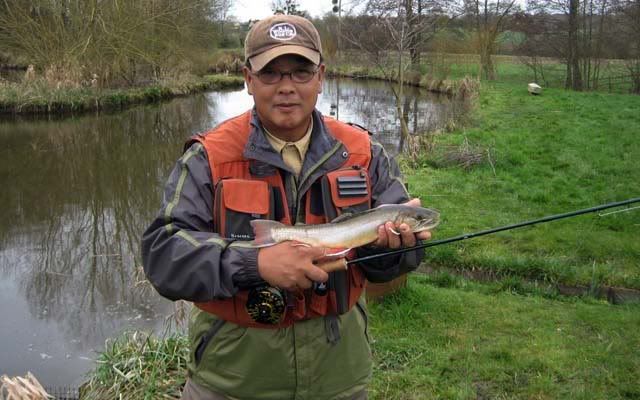
My One and Only Sebarau


Suddenly, the rod jolted and took a deeper bend than usual. This fish was definitely much bigger than the others thus far.........

An account of my first experience with feisty Sebarau.


To read more....... http://alfiesflyfishing.blogspot.com/

Tuesday, March 13, 2007

Abu Dhabi Beckons All Ye Fly Fishers!


Discover saltwater fly fishing at the desert edge. I am now in Abu Dhabi having a great time with salties here. Join me on at a fishing hole I found in the city that's great fun!

Alberto's Journey

Here is a guy whose fantastic fly fishing journey take him round the world.

Alberto Chan.

Read more about him http://flyfishingsg.proboards38.com/index.cgi?action=display&board=FreshWater&thread=1115257533&page=25

Fly Fishing New Zealand 3


This is the final installment of my New Zealand adventures. More like a photo journal actually.....

.......the views are fantastic and breathtaking.


....Read More...>...>...http://alfiesflyfishing.blogspot.com/2007/03/photos-of-past-new-zealand-forays.html

Monday, March 5, 2007

Fly Fishing New Zealand 2

It has been quite a while since my last post, no thanks to two and a half weeks of reservist duty.

Where did I last stop?.....OK… Early next morning, at 7 am (that’s 2 am S’pore time) I looked out of the window and saw a dreary, misty sight. It was low clouds and misty and damp!

I had spent the night before sorting out my fly boxes, flies, and re-checking the bag (I had driven 2 hrs to a river once before a found out I had brought a reel loaded with 4 wt line when I had with me a 6 wt rod).

“Hell if I’m going to waste the morning just because it looked like horrible,sleep in weather in the city!” I had to psyched myself up for the day ahead.

It was around 15 °C that morning. I drove to Denny’s for breakfast as I pondered my options for the day.
1) I could drive north of Christchurch to the Hurunui River that I never had any luck in, or
2) Drive south to that river that Mike recommended…now what was that name again??

I looked at the road map when I got back to the car. There were two rivers that started with ‘O’ – the Opahu and the Orari. They were both around the same area.. so confusing!.......I decided to just drive south, taking my chance with the weather and to check out the two rivers anyway.

Driving down on Highway 1, the weather was coming in waves of low clouds and drizzle with radio weather forecasts for rain in the Canterbury region. Pressing on, I drove past the town of Ashburton on towards Rangitata for the next one and a half hours before taking Highway 79 towards the mountains. (see this site for map of Central South Island of New Zealand and its numerous rivers http://www.nzfishing.com/FishingWaters/CentralSouthIsland/CSIRegion/CSICentralSouthIslandregion.htm)
After almost 2 hours of driving, I crossed the Orari River. It looked more like a stream and access from the bridge didn’t look very promising, so onward I drove. After 20 minutes or so, I came across a bridge with a sign that said ‘Opahu River Bridge’. I immediately took the first turn off and went down the dirt road that lead to the river.

There was already a campervan parked by the river so I thought that I might have to go further downstream in case they were fishing – there is certain fishing etiquette to adhere to in these parts. However, I stopped the car and went up to the folks in the campervan and asked if they were fishing, just in case. Good thing I thought to ask because they were just parked there overnight and were moving on southward. It was already about 11:15 am by then and I didn’t waste any time getting into my waders and gearing up.

The weather was still overcast with an upstream wind blowing. I stood at the waters edge and started to fish with a two nymph rig of my 4 wt rod. The river looked very appealing until the nymphs I was fishing started to catch on to the bottom. I pulled in my flies and saw that the nymphs were covered in algae. This happened on every drift and was very frustrating. I moved upstream on the riverside to the bottom of the bridge and tried some of the holes there but no luck. Moving further upstream, I spent almost an hour fruitlessly nymphing the water and removing scum from the flies.

Sidenote: On my entry into New Zealand, I was given a leaflet informing visitors of the Didymo problem that the country is currently fighting. Basically, Didymo is an alga that is foreign to New Zealand and is choking up numerous water ways. More information can be found at http://www.biosecurity.govt.nz/didymo . By all descriptions, the algae in the Opahu River didn’t look like Didymo, but better that I didn’t step into the water. Moving back to the car, fishless, I pondered my next course of action.

The map showed that I wasn’t too far from the famous Lake Takepo. There is good lake fishing at Takepo, but I was more interested in river fishing. I didn’t have much information on the rivers in the Mackenzie region that Lake Takepo is located in as I didn’t intend to come down so far south. But seeing how the weather was looking, me fishless, and that it was only going to be another hour drive, I pressed on.

As I passed through Burkes Pass into the Mackenzie basin, the sky opened up and the clouds disappeared. The mountain range behind me held up the low clouds and before me was clear blue sky! This was looking good! Beautiful!


Driving into the Mackenzie Basin


After another 20 minutes driving, I reached Lake Takepo. I stopped at a hotel to ask for directions for the river or the nearest fishing spot. After some vague directions from the girl at the reception counter, (She wasn’t even a Kiwi!) I drove out of town and found my way to the river. What a sight and relief to see this lovely blue river before me! It was braided in some parts and had a series of nice runs, best of all, I saw some guys fishing! I drove further downstream and got ready to fish.


Driving past Lake Takepo and passing the canal from Hydro dam


It was still as windy, if not more. I opted to fish my 6 wt to best battle the wind.

Stepping cautiously into the river, I checked a couple of rocks to see what kind of insect life was around and found some mayfly and caddis nymphs. I tied on a size 14 yellow Humpy and on a short dropper, a size 16 Pheasant Tail Nymph (PTN). Starting at the head of a run, I began casting in the water nearest to me. Slowly moving toward the middle of the river, I spotted a dark torpedo shape on the opposite bank. It looked very much like a trout about a foot long.

“Could it be a trout?” I wondered. The shape was not moving and was tight against the bank in only 20 cm of water. I tried a few exploratory casts in front of the ‘fish’ – no reaction! The wind was blowing upstream from my right to left and there was fast moving water between the target and me. Trying to cast to a target only 15 -18 ft in front of you with 12ft of leader and 3ft of fly line out of the rod tip, PLUS the wind – it’s pretty difficult! Working hard to fight the wind and drag, I tried to get in a couple of casts to the fish, but still no reaction. Getting bolder, I moved closer and cast again. Distracted by the wind and uneven stones beneath my feet, I overshot the cast and the nymph got tangled in some roots at the waters edge. By that time I was sure that all my efforts had been wasted on a piece of wood.

I was just in reach of the fly to untangle it when the ‘dead’ piece of wood came alive and bolted into the fast water just two meters below me. The broken water must have distorted my silhouette as the fish didn’t swim away. But in my excitement, I put in a few lousy presentations that finally spooked the fish downstream. Bloody stupid of me! Well, at least I knew that this river held fish!


The River - check out the clarity!


With a renewed sense of purpose, I scanned the waters upstream through the Polaroids and started to work my way up. Clean, clear water is great for stalking fish, but if you can see the fish, the fish can also see you. After one and a half hours, almost 1 km and another spooked fish later, I was really starting to doubt if I was really cut out for this kind of fishing. I eventually worked my way up the river till I could see the other fishermen I had seen on my way in earlier.
I moved out of the water to pass by them and waved a ‘hello’. I noticed that of the two gentlemen, one was nymphing with a fly rod, and the other was spinning with a minnow lure. Not more than 30m after I had walked past the two men did I heard a shout. Turning around, I saw the fly fisherman’s rod in a deep bend and he was trying to gain control of his fly line. Moving closer, I watched him fight the fish until his rod suddenly bounce back, pointing straight up to the sky.

“What happened?” I asked. The man with the spinning rod explained that his friend had lost the fish, a nice one, around an underwater boulder. I inquired if they fished here often and if there were any good fish in this river. He told me that his friend had caught and released three fish already and that this river was quite dependable for trout. I thanked the man and wished him good day.

“Three fish!! And I bet they weren’t there very long!” I cursed to myself. Well, local knowledge helps I guess. By now I was about 1.5 km from where I parked my car. I decided that I would fish the same stretch of river once more – downstream. I backtracked away from the river giving those guys space to fish walking parallel to the river for a few hundred meters before heading to the water. This time I shortened the leader to 9 feet and tied on a size 14 Beadhead Hare and Copper and a size 16 PTN at the point.

Starting at the head of a riffle, I began to try and systematically cover the water by casting down and across then taking a step downstream before doing the same cast again. It was already 4:30 pm and bright and sunny. By 5 pm and 50 m down river, I was beginning to pray for fish -- 3 separate outings to 2 major rivers in New Zealand, and yet, no famous big NZ trout.

Finally, casting to drift my nymphs in front of a mid stream submerged boulder, the flies stopped. Thinking that they were caught up on a stone, I lifted the rod and felt that indeed they were attached to the riverbed. Putting more back pressure to the rod, I suddenly felt a pulse in the line and ‘riverbed’ started to swim off downstream! I immediately lifted the rod to 45 degrees and a put a nice arc in my 6 wt rod. Keeping my rod tip high and stripping in line, I could feel the fish using the current of the river to its advantage. The fish showed itself to be a rainbow trout about 40 cm long with all its fins fully erect, creating a much drag as it could. Using side strain and trying not to give line to the fish, I reeled up the slack line to fight the fish off the reel. I slowly walked the fish back towards the riverbank and the fish came in quietly… that was until it realized it was in shallow water! The rainbow shot off across and down the river with line slipping through my fingers. Taking into account the line drag in the water plus the line resistance through my fingers, I was trying my darnest not to pop the 5lb tippet I was using. Finally, knees shaking and hands trembling, the rainbow came into view again. With only 10 cm of fly line out of the rod tip, I opted to walk back up the riverbank and ‘walk’ the fish in. As it laid on the sand, I whipped out my camera and fired off a couple of shots (Photos not that good ‘coz hands still shaking).

My prize Beauty!
The rainbow was a little larger than I estimated. About 45cm and 1.5 to 2 kg, it had taken the size 16 PTN. Removing the fly, I picked it up carefully and cradled it in the current. I thought the fish would take a while to recover given the fight, but in 2 seconds it flicked its tail and swam off, disappearing from sight.


Words cannot describe the euphoria and relief as I watched the trout swim off! FINALLY!!, after driving so far, after two fail outings, I can truly say that I caught a noteworthy NZ trout! Not that I didn’t catch anything in my other outings… but to finally hook and land a big trout from a flowing river in such scenic countryside, it’s ….like living a dream!!!


Mission accomplished, I fished the remaining water aimlessly till I reached the car. It was almost 6:30 pm by now and it was time I started making my way back. Good thing summer means late sunsets…..by the time I changed out and packed up it was almost 7 pm. Before I left the river, I stopped to take a few more picture of the whole place while there was still ample sunlight. From the town of Takepo, I drove non stop till I reached Christchurch city, a journey of almost 3 and a half hours.


Thus ends an ‘epic’ journey for me. I’ve fished for trout in Japan, Canada and also the UK, but this outing was by far the most memorable. It has inspired me to delve deeper into the numerous facets of this sport or ‘art’ that we call Fly Fishing. As promised to our friend Billy, I’ll endeavour to contribute whatever two cents worth I can to this blog.

I’ll try to dig up my other photos of New Zealand and post them next time.

Cheers!

Tuesday, February 13, 2007

Fly Fishing New Zealand

By: Alfie


Fly fishing in Singapore is rather limited, or limiting. Opportunities for river or lake fishing are virtually non existent, unless one ventures into Malaysia or another neighbouring country. I’m sure that most fly fishers that get into this sport have at one time or another dream catching a trout or salmon on a fly. So whenever my job takes me somewhere I can catch a salmonid, I make full use of the chance.

February 9th , 2007 sees me landing in Christchurch, New Zealand. It’s mid summer and it’s trout season. I’ve been to Christchurch on numerous occasions and have caught some small rainbow before but nothing big. This time I was determined to get me a decent fish! New Zealand as we all know is famous for trout – BIG TROUT. Though the trout are not always available in huge numbers in the rivers, the number of trophy fish that can be caught are. My trip would only see me get a day and a half of fishing and the weather on arrival wasn’t at all great. It was overcast with drizzle and intermittent rain. Can’t complain right?

Undeterred, I sorted out the car rental the moment I stepped into the hotel room and went out to get the car. At NZ $69 a day, it wasn’t so bad considering it was Friday and during peak season. Then, it was off to Mike’s Fishing Tackle in the city to buy my fishing license for the next two days and of course, to find out where the current hot spots were. As usual, Mike was very helpful and laid out my options for rivers that were within 2 hours drive of Christchurch. There are many streams and rivers near the city and some of course had good runs of salmon, sea run trout, browns and rainbows….. Decisions…decisions!
What flies were the fish taking? Big bushy dries or small nymphs were the order of the week. A Size 14 or 12 Humpy with a small size 16 nymph tied to the bend of the dry would pretty much would do the job. As some of the runs in the rivers are quite deep, a twin nymph rig would be required. It was a good thing I tied a couple of Bead Head Hare n Coppers plus some Pheasant Tail Nymphs the afternoon of the day of my flight.

After everything was settled, it was almost 3:30 pm and I decided to go somewhere close by to fish the rest of the afternoon. Back to the hotel to grab all the gear and off I went.

The Waimakariri River (or the Waimak as the locals call it) is just on the outskirts of Christchurch. It is a big braided river that has salmon runs at its mouth. The river itself was too big for me to fish comfortably, and it’s mostly that light blue colouration with fine silt… I’d tried to fish it once…. not for me. So I ended up in the South Branch of the Waimak. This is a tributary that looks like a spring fed river/stream, I’m not sure. It has several pools, some quite deep and it runs through mostly paddocks.
There are, however, several points of access to the river as marked out by NZ Fish and Game signs. One has to contend with curious cows that sometimes come too close for comfort.

This time I used another point of access that I had not tried before. Walking through the paddocks, I got disoriented for awhile before I eventually made it to the stream. It was choked full of weed and I was a little disappointed to say the least.
“But what the heck, having trudged all the way here, might as well give it a shot”, I consoled myself.

So I rigged up my 4 wt and a 9 ft tapered 4X leader and tied on a size 14 Bead Head Pheasant Tail Nymph (PTN) and a size 14 PTN. The wind

was blowing pretty strong in my face and the whole rig was quite a handful (Fishing for Peacocks is so much less complicating). I was getting hung up in the weeds (as you can see in the photos) on nearly every drift. Trying to get a drift in the lane between the weeds was not an easy affair. After 4 or 5 drifts, the nymphs got stuck and I lost the tippet with the two flies. ShXX! And it was starting to rain! After 45 minutes of fruitless efforts, I went back to the car and tried another spot downstream where I had some luck on a previous trip – ZERO, ZIP... NADDA!

So, Day 1 ended with me - 0, fish and all the elements – 1.
Tomorrow, well, that's another story .................

Friday, February 2, 2007

Before Bamboo..


All right, one has to purge all sins before retreating into the pure black bamboo grove of Guan-Yin.. or so I think .

In this spirit, I will divulge 4 lessons via three and a (significant) half tales that have nothing to do with purist flyfishing views but plenty to do with the love of fishing. Got to get our fundamentals right!

Tall-tale Uno – Learning from Master Loh

Despite the present generous spare tire around my waist, I used to pound the pavements around the Taiping Lake Gardens in my salad days. Everyone, including my school’s headmaster thought I was a great sportsman, and assumed I was cross-country training during those ungodly pre-dawn hours. Unbeknownst to all, I was running from fishing spot to fishing spot searching for Master Loh.

The Master was probably in his 40’s when I first knew him. He was the town railway stationmaster. He always had two Abu rods rigged up with matching Abu eggbeaters. In the carrier basket of his Honda Cub was usually a clear plastic bag with a few geckos and a Brylcream container of nightcrawlers. I would wait patiently a few rod lengths away while he parked among the trees, remove his skull coloured helmet, grunt a greeting and begin setting up his gear. He would first rig up his float tackle with a chopped worm bait. This rig will be cast just a few feet away near the bank and left undisturbed. Then he would prepare his gecko bait by giving the creature a few sharp raps and impaling it with a mean-looking two inch hook weighted with coils of wire. The bait would be tightly secured with rubber bands and cast smoothly to the nearest banks and then the opposite bank. Each cast was measured for effect. It had to produce a ‘plop’ like a creature diving from the bank to attract feeding Haruans and also, according to the Master, produce a ‘scent trail’.

He somehow caught plenty of fish everyday, every time, even in seemingly barren waters. The little red/white foam float will emit rings of vibrations on the mirror surface of the lake before finally going under and viola! a sebbie, belida , terubol, lampam or tilapia. The slapping gecko would hook up Haruan and even the occasional Marbled Goby. He never spoke much but through observation it was clear that he totally believed in his tackle and the fact that fish do go hungry. Coupled with a smooth bait delivery style, he took fish from touching distance.

We anglers tend to get too technical, get worried and loose instinct along the way. I learnt from the Master that fish never run and hide all the time and can even be tempted to take after feeding hours. It only takes quiet persistence. The first few years I fished with a license (instead of poaching) at the Lakes I still carried that glow of confidence he left in me. Armed with just a mauled Abu spoon, I would haul in many haruan for grandma to cook porridge. I believed in that spoon!

Translated to flyfishing, I believe in my tackle from canerod to fly even though the total strength of the set-up is only a 4lb tippet. The best fishing is always when I cast with confidence and many cases fish were taken just a few feet away!


Tall-tale Duo – Feeling for fish

Fish are hard to catch. We complain that hooking those fishy mouths are way too tough. In those teenage days doing tough things seem so important and so a few of us rebels took this challenge a notch higher by going hand-fishing in the streams. Armed with snorkels and goggles, we would start downriver and slowly wade upstream. Schools of tengas and seluang will be spotted and they would suddenly disappear in a deep hole or a rocky patch. We would then use our fingers to slowly feel under rocks and ledges. Fish are cornered in this situation and will usually remain absolutely still until cupped in our hands. Woe is the unlucky one who grabbed at catfish. I did it once and thank goodness the spines just missed my palm.

We caught more than just fish this way and picked up observation skills of aquatic life under the rocks normally hidden from view. We also saw more local species than one would normal notice while fishing. The mysterious Kenderap was one ‘shark-like’ fish we found at the rapids that blew everyone’s imagination away.

In flyfishing, we literally turn over rocks and are sensitive to the 'hatches' whether insect, finned, annelidean or crustacean. Even growth of weeds and flowering of bankside trees become fascinating.


Tall-tale Trio – Time and Tide

Michelle and I used to camp overnight at Ubin at the jetty beside the quarry facing the Ketam straits. There were two concrete jetties located in parallel there but one had finally collapsed. We used to hook loads of sembilang ( catfish eel) from those spots and could never figure out where the other fish species went. So one session I started charting the types of bites at different locations around the jetty, times and tides, and noticed that the sembilang only occurred when currents were slow and hits from snappers, gelama and barra only occurred when the current was running 2 hours into or after high tide. The big hits were actually occurring at the collapsed jetty pylons just a few meters away and not out in the straits where the ‘grass seem greener’.

Armed with this information, we made a calculated trip to the spot one weekend and found our camping spot at the jetty taken by a bunch of army boys. They had buckets of life prawns and plenty of gear but had caught nothing. I told them to stay up to 2.00am and watch for action. Come 2.00am, the tide was running strong and I drifted a lugworm bait into the pylons… wham! The rod bent double and line was cutting through the water dragged by a very mad golden snapper. The boys’ mouths dropped and I was really pleased. I believed in my tackle, knew where fish disappeared to, knew time and tide.

In flyfishing terms, this niche of knowledge is called 'reading the water'. It is not surprising that many experienced fly anglers do not stomp into a new spot and flay away but spend some time understanding the water before dropping a fly.


The Other Half

Many anglers face pressure from their significant other to stop fishing and spend more time shopping and more dough on shoes. I’m no different but I’m armed with a special story that keeps me fishing while shopping.

My first ever blind date was actually followed up with a quick plan to go fishing and camping together at the very spot in Ubin mentioned. My date and I arrived there one Saturday evening whereby it started to drizzle and light was fading quickly. I was out to impress but was faced with a real washout! To my surprise my date seem unfazed and quickly helped me set up camp. Then, armed with a torch light each, we scoured among the lalang for firewood. We took more than an hour and garnered only damp sticks and a fallen Albissia trunk. I started a small fire using scraps of newsprint and both of us slowly piled on the small sticks and gradually the larger pieces. There was smoke everywhere but not a squeak of complaint or expression of doubt came from my date. Soon, smoke melted into fire and we had a blazing conflagration. In the now bright light I saw a face, a smile, and I saw pride and hope. As if to celebrate the spark the Albissia started to catch fire and pop like fireworks! Amazing coincidence.

We caught fish that night but that was beside the point since my date during that fishing trip was Michelle and we have been building our little fires of hope ever since… This is why I always consider myself to be on a fishing trip even while gazing at yet another pair of shoes. Metaphorically speaking, I married my biggest catch!

Fishing and it follows that flyfishing is both a solitary and shared sport. Solitary because it is an intense dancing duel between you and the fish. Strangely 'shared' because the experience only takes on meaning in the telling of it between friends and loved ones. Having a slightly warped mind that takes every random occurance as 'meaningful' or even godsent is also a great way for one to maintain interest in flyfishing. Once the various 'meanings' are entwined with one's passions, flyfishing becomes a steady fire without need for much kindling.


There it is, all I know about fishing in a few paragraphs. Not much in the eyes of more experienced practitioners but something to share with people who do not know what angling is about. My flyfishing years are only moments in this lifetime in pursuit of the finned ones. We are getting close to bamboo now…

Happy fishing until the next tale!
 

Fly Fishing Club Singapore